
Understanding Indian Laws protecting Personality Rights

Explore the intricacies of personality rights in India, including legal frameworks, key cases, and practical measures to protect personal identity and reputation from unauthorized commercial use and defamation.
The interplay between the Cape Town Convention and insolvency law when a private airline company undergoes liquidation in India

This article provides a detailed analysis of how the Cape Town Convention (CTC) intersects with India’s Insolvency and Bankruptcy Code (IBC) in the context of aviation insolvency proceedings. Specifically, it highlights a case where a private Indian airline, Go First, voluntarily entered insolvency due to issues with aircraft engine suppliers. The article discusses the legal challenges and processes involved, including moratorium exceptions, creditor negotiations, and asset recovery by lessors. It underscores the Indian government’s efforts to align domestic insolvency laws with international conventions to protect the interests of aircraft lessors, thus fostering a more secure environment for international leasing activities in the Indian aviation market.
Liability of Ships and Ship Owners for the Bunker Supply Debts of Time Charterers

The article delves into the evolving legal landscape, including the impact of the Admiralty (Jurisdiction and Settlement of Maritime Claims) Act, 2017, and key court decisions shaping current jurisprudence.
This article aims to shed light on:
• The concept of maritime claims and ship arrests.
• The legal responsibilities surrounding bunker supplies under charterparties.
• Notable court cases and their implications for shipowners and maritime claimants.
Delhi Metro Rail Corporation Ltd. v. Delhi Airport Metro Express Pvt Ltd.

In the landmark case of Delhi Metro Rail Corporation Ltd. v. Delhi Airport Metro Express Pvt. Ltd., the Supreme Court of India, on April 10, 2024, set aside an INR 8000 Crore arbitral award using its curative jurisdiction. This judgment revolved around a 2008 Concession Agreement and highlighted the boundaries of judicial review in arbitration.
The Supreme Court found the arbitral award patently illegal due to the unreasonable interpretation of the termination clause, neglect of vital evidence, and insufficient reasoning. This ruling underscores the need for careful balance in arbitration, ensuring justice while limiting judicial interference. Such measures are crucial for India’s ambition to be a global arbitration hub and an attractive destination for foreign investment.
Protecting Brands In India And Europe: Comparison Of Trademarks Laws

Explore the key differences and similarities in trademark laws between India and Europe in this insightful article. Understand how these regulations impact brand protection and intellectual property rights in cross-border business operations.
Navigating the Turbulence: Rethinking Aircraft Lease Laws in India on Termination of Aircraft Lease

Explore the intricacies of aircraft leasing in India and its impact on airlines, passengers, and the aviation industry. This article delves into the challenges faced by Indian airlines in lease payments, the legal gaps in handling aircraft leases, and proposed solutions to streamline the process and reduce economic burdens.
Digital Personal Data Protection Act 2023: Comprehensive Guide, Compliance, and Penalties

Explore the intricacies of the Digital Personal Data Protection Act 2023 with K Singhania & Co.’s comprehensive guide. Dive into compliance requirements, penalties, and key terminologies to ensure your business aligns with India’s latest data protection standards
Tightening the Reins Too Much? The Unintended Consequences of New Related Party Transaction Rules

Explore the implications of SEBI’s new rules for Related Party Transactions (RPTs) introduced in April 2022.
This article delves into the potential challenges and unintended consequences of these regulations, offering a nuanced perspective on their impact on India’s corporate landscape.
A Case for Artist Royalty Rights in India, With EU as a Reference
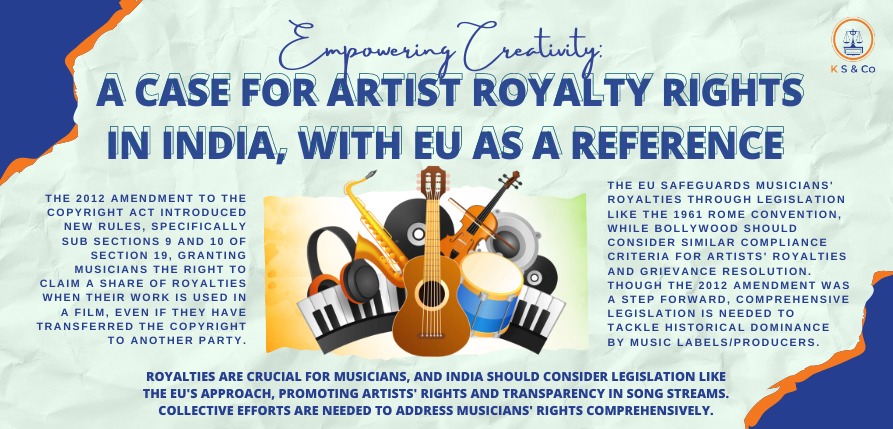
Introduction: With the advent of the internet, accessibility of music has increased multi-fold creating a highly profitable industry worldwide. The music labels that publish music in their own name have become huge conglomerates who control how and when any music would be published on any of the prominent streaming platforms. However, the artists behind the […]
Launching Your Venture in India: How Can Our Law Firm Guide You?

Are you eyeing India’s thriving market and vast talent pool for your next business expansion? While the potential is immense, setting up shop in a new country can be fraught with legal and regulatory challenges. At our law firm, we leverage our rich experience and in-depth knowledge in international business matters to guide you through […]