
The first quarter of 2026 has witnessed several significant judicial and regulatory developments shaping the intellectual property (IP) landscape for the pharmaceutical and life sciences sector in India. Courts have engaged with complex questions surrounding biologics, patent validity, export-oriented manufacturing, and pharmaceutical trademarks which are areas that are critical for both innovator companies and generic/biosimilar manufacturers.
These judgements reflect a continued effort by the Indian courts to strike a balance between innovation incentives, public health considerations, and market competition, while also reinforcing procedural and evidentiary standards in IP enforcement. This newsletter provides an overview of key developments and examines their implications for companies operating in or entering the Indian pharmaceutical market.
Key Pharma Patent Developments
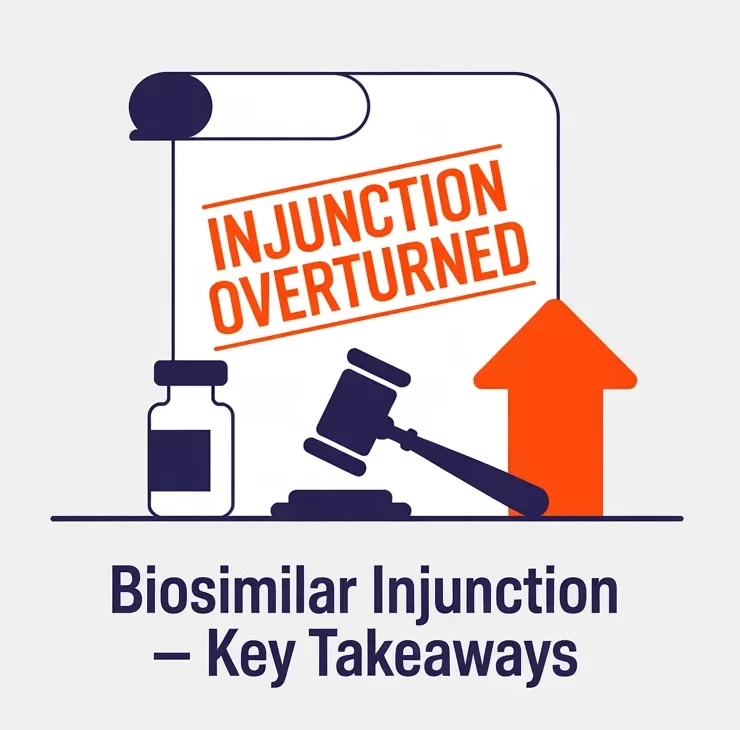
Zydus Nivolumab Biosimilar – Injunction Overturned
ZYDUS LIFESCIENCES LIMITED vs E. R. SQUIBB AND SONS, LLC & ORS. | FAO(OS)(COMM) 120/2025 | Delhi High Court, Division Bench – 12 January 2026
In a landmark decision concerning biologics and biosimilars, the Delhi High Court set aside an interim injunction that had restrained Zydus Lifesciences from launching its biosimilar version of Nivolumab, a monoclonal antibody used in cancer treatment and marketed globally as Opdivo.
Background: The dispute arose from the patentee’s attempt to prevent the launch of Zydus’ biosimilar (ZRC-3276) on the basis that it was developed by referencing the patented biologic. The single judge had previously granted an injunction, effectively treating biosimilarity as indicative of patent infringement.
Key Findings: The Hon’ble Division Bench rejected this approach of treating biosimilarity as indicative of patent infringement, and explained a distinction that:
- Biosimilarity is a regulatory concept, assessed based on safety, efficacy, and quality.
- Patent infringement is a legal determination, requiring strict claim mapping against the patent claims.
The Court further noted:
- Absence of evidence demonstrating that Zydus’ product fell within the scope of the asserted claims of infringement.
- Possible non-fulfilment of certain claim limitations (e.g., binding affinity thresholds, which is a scientific parameter often in biologic patents to define how strongly a molecule (like a drug) binds to its target).
- The patent was nearing expiry, reducing the justification for interim relief.
Importantly, public interest considerations played a decisive role:
- The biosimilar was expected to be significantly more affordable for the general public (~70% cheaper).
- Denying access of these biosimilars would adversely impact patient affordability.
While vacating the previous injunction, the Hon’ble Court directed Zydus to maintain accounts of profits, thereby safeguarding the patentee’s potential monetary claims.
Significance: This ruling raises the evidentiary bar for patentees seeking interim injunctions in biologics cases, especially in quia timet actions (pre-launch disputes), and signals a more cautious approach toward restraining biosimilars.
Post-Expiry Revocation of Pharma Patents – Linagliptin
BOEHRINGER INGELHEIM PHARMA GMBH AND CO KG vs THE CONTROLLER OF PATENTS & ANR. | LPA 129/2025 | Delhi High Court, Division Bench – 24th February 2026
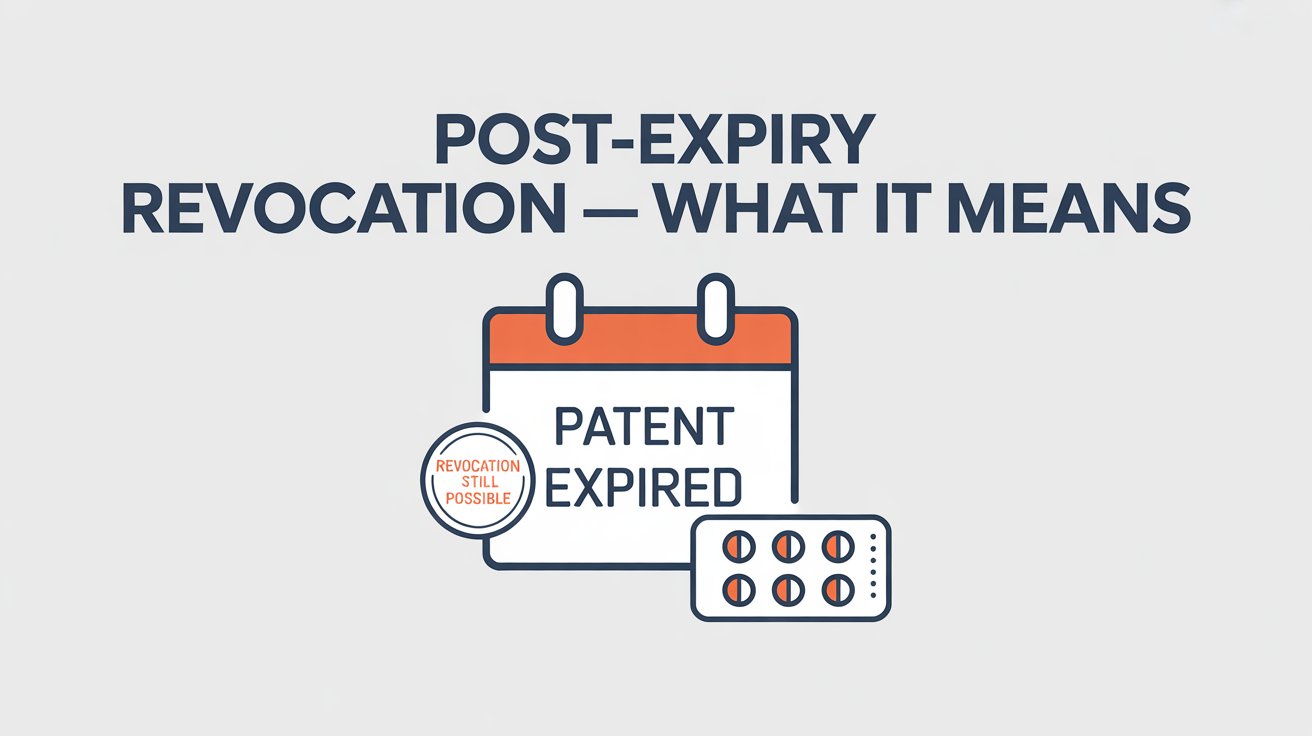
This case addressed whether a patent can still be challenged after its expiry, in the context of Linagliptin (a diabetes drug marketed as Trajenta).
Background & Procedural History:
- Indian Patent No. IN 243301 relating to the pharmaceutical product Linagliptin (used in diabetes treatment) was granted to Boehringer: Date of grant: 5 October 2012; Priority date: 21 August 2002.
- On 17 February 2022, Macleods Pharmaceuticals filed a revocation petition before the Delhi High Court under Section 64(1) of the Patents Act.
- Shortly thereafter Boehringer filed an infringement suit before the Himachal Pradesh High Court, alleging infringement of IN’301.
- Macleods, in its written statement, raised a defence of invalidity under Section 107(1).
Interlocutory Applications by Boehringer: Boehringer filed applications seeking dismissal of the revocation petition on two key grounds:
- Expiry of Patent (IA 7635/2024): Patent IN’301 expired on 18 August 2023 (efflux of time). Arguments raised: Revocation proceedings do not survive post-expiry; No revocation can be initiated or continued after expiry.
- Parallel Invalidity Defence (IA 46685/2024): Macleods had already raised invalidity under Section 107 in the infringement suit. It was submitted that a separate revocation petition under Section 64 was not maintainable after an invalidity has been claimed under Section 107 of the Patents Act.
Key Findings: The Court rejected both arguments and clarified that:
- Patent revocation operates retrospectively (ab initio). This meant that a revoked patent is treated as though it never existed.
- Expiry does not extinguish the right to challenge validity, particularly where the patent had commercial consequences.
- The Court further held a Section 107 invalidity defence does not bar a separate Section 64 revocation petition.
- However, courts must avoid duplicative adjudication, in line with the “one revocation” principle.
Significance: This ruling is particularly important for the pharmaceutical sector, where patent validity affects past damages and liabilities, and market strategies may have been shaped by the patent’s existence. It ensures that weak patents remain open to scrutiny, even post-expiry.
Novo Nordisk v Dr. Reddy’s Laboratories – Export Manufacturing of Semaglutide
Novo Nordisk v. Dr Reddys Laboratories Ltd. | 2026 SCC OnLine Del 898 | Delhi High Court – 9 March 2026
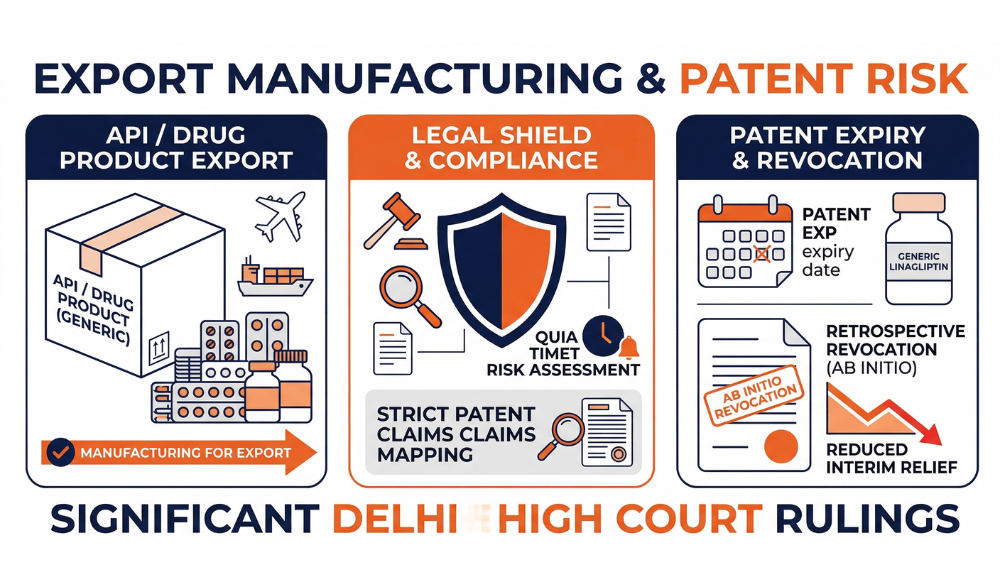
This case examined whether manufacturing a patented drug in India solely for export to countries without patent protection constitutes infringement.
Background & Factual Matrix:
- The dispute concerned Indian Patent No. 262697 (“Suit Patent”), titled: “Acylated GLP-1 Analogs Comprising Non-Proteogenic Amino Acid Residue”, covering Semaglutide.
- Key patent details: Filed: July 2007; Granted: September 2014; Expiry: 20 March 2026.
- Semaglutide is a globally significant drug used for diabetes and obesity, marketed under Ozempic, Wegovy, and Rybelsus.
- In October 2024, the Plaintiff discovered that certain Indian entities were importing and potentially manufacturing Semaglutide.
- Upon investigation the Defendant was found to be importing and exporting large quantities, indicating commercial activity (not merely for research purposes). Subsequently, a cease-and-desist notice was issued in May 2025.
- In response the Defendant filed a revocation petition challenging the validity of the Suit Patent. The Plaintiff initiated an infringement suit seeking an interim injunction under Order XXXIX Rules 1 & 2, CPC.
Undertaking Before the Court:
- During the hearing on 29 May 2025, the Defendant admitted manufacturing Semaglutide and gave an undertaking to not sell or market the drug in India and reserved the right to export to jurisdictions where no patent exists.
- The Court recorded the undertaking and thereafter did not restrain exports at that stage.
- On appeal, the Division Bench directed the Single Judge to decide the interim injunction application.
Court’s Analysis & Findings on Validity (Credible Challenge under Section 64):
- The Court first reiterated the “credible challenge” standard: A granted patent does not carry a presumption of validity (Section 13(4)); The relevant threshold at the interim stage is whether the defendant has raised a serious, non-frivolous challenge to validity. If such a challenge is established, interim injunction must ordinarily be refused, and the matter should proceed to trial.
- Priority Date and Treatment of Prior Art: The Plaintiff asserted a priority date of 18 March 2005. However, the European Opposition Division (EOD) had held that the relevant claim was not entitled to this priority; instead, the effective priority date was March 2006.
- Anticipation by Prior Publication (Section 64(1)(e)): The Court clarified that prior art need not explicitly name “Semaglutide”. It is sufficient if it discloses the essential features of the invention.
Final Decision: The Hon’ble Court held that no blanket injunction was granted and decided that the Defendant may continue manufacturing in India and only export to jurisdictions where no patent exists. However, this decision does not release the Defendant from their undertaking, which means that the Defendant was prohibited from selling their products in India.
Pharma & Healthcare Trademark Developments
“GLIMET” vs “GLYZET / GLYNET”
Laboratories Griffon Pvt Ltd And Anr vs Rajiv Mukul Proprietor Of Zee. | INTERIM APPLICATION NO. 3540 OF 2022 IN COMM IP SUIT NO. 213 OF 2022 | Bombay High Court – 13th January 2026
In a significant ruling reaffirming the heightened scrutiny applicable to pharmaceutical trademarks, the Hon’ble Bombay High Court granted an injunction in favour of the plaintiff’s mark “GLIMET”, restraining the defendants from using the deceptively similar marks “GLYZET” and “GLYNET.”
Factual Background: The dispute arose in the context of anti-diabetic pharmaceutical products, a therapeutic segment where precision in drug identification is critical. The plaintiff, proprietor of the mark “GLIMET,” had been using the mark in relation to medicines for the treatment of diabetes and had built a degree of recognition in the market. The defendants had earlier given undertakings to the Court agreeing not to use marks that were deceptively similar to the plaintiff’s mark. Despite such undertakings, the defendants adopted and continued to use the marks “GLYZET” and “GLYNET,” prompting the plaintiff to initiate contempt and infringement proceedings.
Court’s Analysis: The Court undertook a phonetic, visual, and structural comparison of the marks and observed that:
- All marks shared the common prefix “GLY”, which is commonly associated with glucose-related medications.
- The suffixes “MET,” “ZET,” and “NET” were found to be phonetically similar, especially in the context of prescriptions, where handwriting or verbal communication may be unclear.
- The overall structure and cadence of the marks created a real likelihood of confusion, particularly among patients, pharmacists, and medical practitioners.
The Court placed strong reliance on established jurisprudence (including principles from Cadila Healthcare Ltd. v. Cadila Pharmaceuticals Ltd.) which mandates a stricter test in pharmaceutical trademark disputes due to the direct impact on public health.
Aggravating Factors: What made this case particularly serious was the conduct of the defendants:
- Deliberate breach of prior undertakings given to the Court;
- Evidence suggesting dishonest adoption rather than coincidental similarity;
- Continued use of the impugned marks despite being on notice.
Relief and Penalties: In light of these factors, the Hon’ble Court:
- Granted a permanent injunction restraining use of the impugned marks;
- Imposed exemplary costs of ₹50 lakhs, signalling strong judicial disapproval;
- Directed initiation of perjury proceedings, highlighting the seriousness of misleading the Court.
Legal Significance: This decision reinforces several key principles:
- Pharmaceutical trademark disputes are subject to a public interest overlay, where even minimal confusion is unacceptable;
- Courts are willing to impose punitive costs and sanctions where parties act in bad faith;
- Prior undertakings, once breached, significantly weaken a defendant’s case and invite stricter scrutiny.
Further Trademark Developments
“BONRICH” vs “BONERICH”
Kedar Nath Mishra v. Invision Medi Sciences Pvt. Ltd. | FAO (COMM) 159/2024 | Delhi High Court – 13th January 2026
In contrast to the strict approach seen above in GLIMET, the Delhi High Court in this case clarified that pharmaceutical trademark disputes are not exempt from foundational principles of passing off, particularly the requirement to establish goodwill.
Factual Background: The plaintiff claimed rights over the mark “BONRICH” and sought an injunction against the defendant’s use of “BONERICH,” alleging deceptive similarity and likelihood of confusion in relation to pharmaceutical/nutraceutical products. An interim injunction had initially been granted in favour of the plaintiff, restraining the defendant’s use of the impugned mark.
Court’s Reassessment: Upon a detailed review, the Court set aside the earlier passed interim injunction, emphasising that:
- The plaintiff had failed to demonstrate sufficient market presence, sales figures, or consumer recognition;
- Mere prior adoption or registration of a mark does not automatically translate into protectable goodwill;
- Passing-off actions require proof of the classical trinity: Goodwill, Misrepresentation, and Damage.
Key Observations: The Court made it clear that while pharmaceutical products demand stricter scrutiny due to public health concerns, this does not dilute the requirement for plaintiffs to establish actual reputation in the marketplace. The absence of concrete evidence such as sales turnover, marketing expenditure, distribution network, or consumer recognition, proved fatal to the plaintiff’s claim at the interim stage.
Legal Significance: This ruling introduces an important balance:
- Courts will not grant automatic injunctions merely because marks are similar in the pharma space;
- Plaintiffs must still satisfy evidentiary thresholds, particularly in passing-off claims;
- It prevents misuse of trademark law by entities seeking to block competitors without real market presence.
“NOVARTIS” vs “NOVARISE”
Novartis Ag vs Novarise Gastro Bariatrics & Ors | CS(COMM) 1395/2025 & I.A. 32357/2025 | Delhi High Court – 20th January 2026
This case highlights the robust protection afforded to well-known pharmaceutical trademarks in India.
Factual Background: The plaintiff, a global pharmaceutical major, sought to restrain the defendant from using the mark “NOVARISE” in relation to healthcare and allied services, alleging that it was deceptively similar to its globally recognised mark “NOVARTIS.” “NOVARTIS” has long been used internationally and in India in connection with a wide range of pharmaceutical products and healthcare initiatives.
Court’s Analysis: The Court recognised “NOVARTIS” as a well-known trademark, noting:
- Its arbitrary and coined nature, enhancing inherent distinctiveness;
- Extensive global and Indian reputation, supported by long-standing use;
- Significant brand recall and association within the healthcare sector.
The Court found that:
- The mark “NOVARISE” appropriated the dominant element “NOVA”, which was central to the plaintiff’s identity;
- The similarity was sufficient to create a likelihood of association, even if not direct confusion;
- In the healthcare context, such association could mislead consumers into believing a connection, endorsement, or affiliation.
Relief Granted: The Court granted an ad-interim injunction, restraining the defendant from using “NOVARISE.”
Legal Significance: This ruling underscores that:
- Well-known pharmaceutical marks enjoy broader protection, extending beyond identical goods;
- The test extends to association and dilution, not just confusion;
- Courts are particularly sensitive to trust-based sectors like healthcare, where brand misuse can have reputational and ethical implications.
Regulatory & Policy Developments
The regulatory landscape in India’s pharmaceutical and life sciences IP sector has also seen notable developments in early 2026, with the CGPDTM issuing important guidance and the DPIIT proposing significant reforms to design law.
CGPDTM Advisory on Online Trademark Filing Services
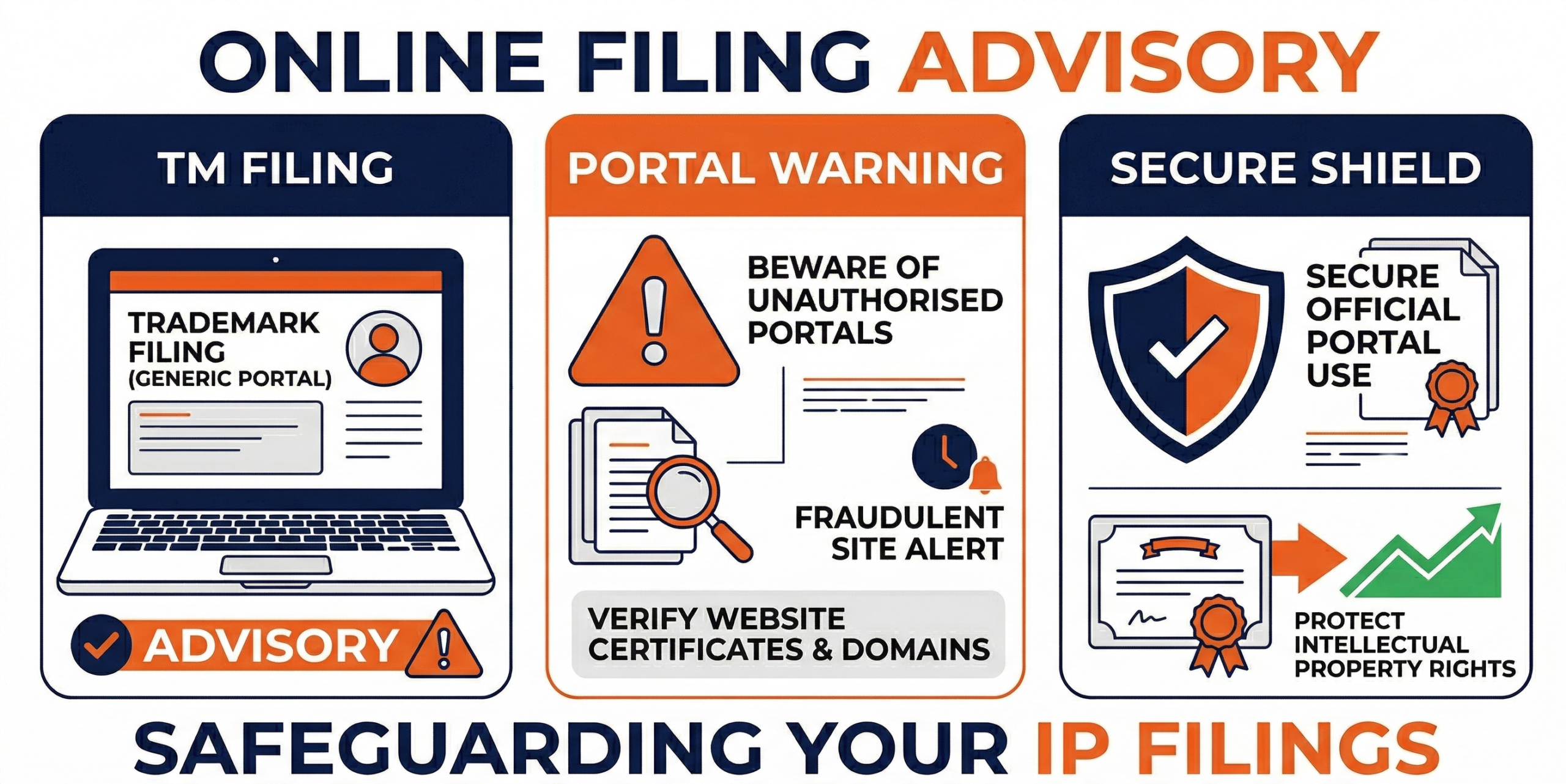
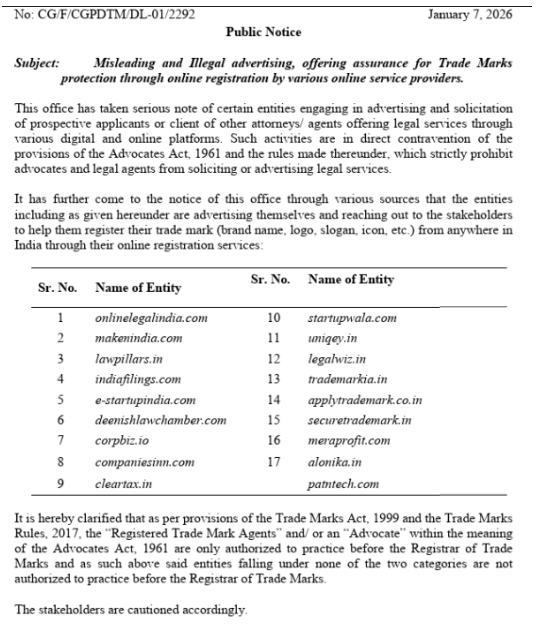
The Office of the Controller General of Patents, Designs and Trade Marks (CGPDTM) issued a public notice addressing the growing prevalence of unauthorised online trademark filing platforms.
Background
In recent years, numerous digital platforms have emerged offering low-cost trademark filing services, often targeting startups and SMEs. However, many such platforms operate without:
- Qualified legal professionals,
- Proper authorisation, or
- Adequate accountability mechanisms.
Regulatory Position
The CGPDTM urged applicants to:
- Engage only registered trademark agents or qualified legal practitioners;
- Exercise caution before relying on automated or unverified services.
Key Concerns Identified
The Registry highlighted several risks:
- Misrepresentation of credentials, where platforms falsely claim affiliation with the IP Office;
- Improper or incomplete filings, leading to objections, refusals, or loss of rights;
- Lack of client confidentiality and data protection safeguards;
- Absence of post-filing support, including responses to examination reports or oppositions.
Implications for Pharma
For pharmaceutical companies where trademarks are closely linked to regulatory approvals, drug safety, and branding, errors in filing or prosecution can have significant downstream consequences, including:
- Delays in product launch,
- Increased litigation exposure, and
- Loss of exclusivity.
DPIIT Proposes Modernisation of the Designs Act, 2000
The Department for Promotion of Industry and Internal Trade (DPIIT) has proposed changes to the Designs Act, 2000 to make India’s design law more aligned with global standards and better suited for modern products. The current law mainly focuses on physical products, but today many products also involve digital interfaces, software-based designs, and combined physical and digital features. To address this shift, the proposal also indicates India’s intention to join international frameworks such as The Riyadh Design Law Treaty, and The Hague Agreement on industrial designs, which could make design protection more streamlined for businesses operating across multiple countries.
Recognition of Digital / Virtual Designs
Protection may be extended to graphical user interfaces (GUIs), icons and animations, designs used in digital environments (including immersive platforms). This helps address the current gap where design law is linked to physical “articles”.
12-Month Grace Period
Companies could now be able to disclose a design before filing, without immediately losing protection as per the proposed reform.
Deferred Publication
Applicants under the proposed reform have an option to delay publication of a design application for up to 30 months.
More Flexible Filing Options
The proposed reform introduces a possibility of filing multiple designs in one application and filing divisional applications.
Improved Enforcement & Procedures
The proposed changes aimed to introduce statutory damages, changes to the term of protection and have simpler processes for recording assignments and licences.
Why This Matters for Pharma & Healthcare
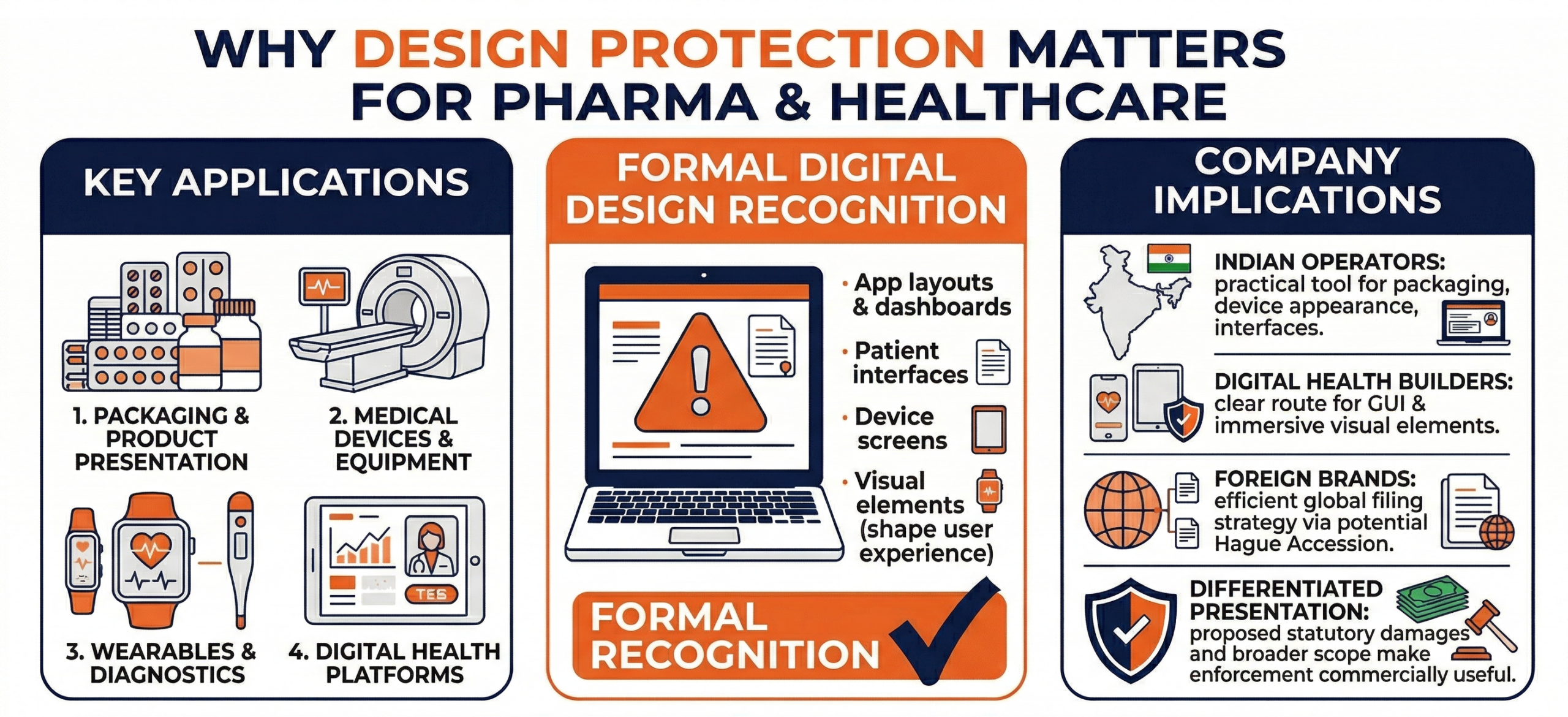
Design protection is becoming increasingly relevant in pharma and healthcare, especially for packaging and product presentation, medical devices and equipment design, wearables and diagnostic tools, and digital health platforms and interfaces. If digital designs are formally recognised, companies could protect app layouts and dashboards, patient interfaces, device screens, and other visual elements that shape user experience.
What it implies for your company
- If you operate in India, design protection may become a more practical tool for packaging, device appearance, and user interfaces.
- If you build digital health products, the proposal may open a clearer route for protecting GUI and immersive visual elements.
- If you are a foreign brand owner, Hague accession could eventually make India part of a more efficient global filing strategy.
- If your business depends on differentiated presentation, the proposed statutory damages and broader scope may make enforcement more commercially useful.
“GLIMET” vs “GLYZET / GLYNET”
Laboratories Griffon Pvt Ltd And Anr vs Rajiv Mukul Proprietor Of Zee. | INTERIM APPLICATION NO. 3540 OF 2022 IN COMM IP SUIT NO. 213 OF 2022 | Bombay High Court – 13th January 2026
In a significant ruling reaffirming the heightened scrutiny applicable to pharmaceutical trademarks, the Hon’ble Bombay High Court granted an injunction in favour of the plaintiff’s mark “GLIMET”, restraining the defendants from using the deceptively similar marks “GLYZET” and “GLYNET.”
Factual Background: The dispute arose in the context of anti-diabetic pharmaceutical products, a therapeutic segment where precision in drug identification is critical. The plaintiff, proprietor of the mark “GLIMET,” had been using the mark in relation to medicines for the treatment of diabetes and had built a degree of recognition in the market. The defendants had earlier given undertakings to the Court agreeing not to use marks that were deceptively similar to the plaintiff’s mark. Despite such undertakings, the defendants adopted and continued to use the marks “GLYZET” and “GLYNET,” prompting the plaintiff to initiate contempt and infringement proceedings.
Court’s Analysis: The Court undertook a phonetic, visual, and structural comparison of the marks and observed that:
- All marks shared the common prefix “GLY”, which is commonly associated with glucose-related medications.
- The suffixes “MET,” “ZET,” and “NET” were found to be phonetically similar, especially in the context of prescriptions, where handwriting or verbal communication may be unclear.
- The overall structure and cadence of the marks created a real likelihood of confusion, particularly among patients, pharmacists, and medical practitioners.
The Court placed strong reliance on established jurisprudence (including principles from Cadila Healthcare Ltd. v. Cadila Pharmaceuticals Ltd.) which mandates a stricter test in pharmaceutical trademark disputes due to the direct impact on public health.
Aggravating Factors: What made this case particularly serious was the conduct of the defendants:
- Deliberate breach of prior undertakings given to the Court;
- Evidence suggesting dishonest adoption rather than coincidental similarity;
- Continued use of the impugned marks despite being on notice.
Relief and Penalties: In light of these factors, the Hon’ble Court:
- Granted a permanent injunction restraining use of the impugned marks;
- Imposed exemplary costs of ₹50 lakhs, signalling strong judicial disapproval;
- Directed initiation of perjury proceedings, highlighting the seriousness of misleading the Court.
Legal Significance: This decision reinforces several key principles:
- Pharmaceutical trademark disputes are subject to a public interest overlay, where even minimal confusion is unacceptable;
- Courts are willing to impose punitive costs and sanctions where parties act in bad faith;
- Prior undertakings, once breached, significantly weaken a defendant’s case and invite stricter scrutiny.
Further Trademark Developments
“GLIMET” vs “GLYZET / GLYNET”
Laboratories Griffon Pvt Ltd And Anr vs Rajiv Mukul Proprietor Of Zee. | INTERIM APPLICATION NO. 3540 OF 2022 IN COMM IP SUIT NO. 213 OF 2022 | Bombay High Court – 13th January 2026
In a significant ruling reaffirming the heightened scrutiny applicable to pharmaceutical trademarks, the Hon’ble Bombay High Court granted an injunction in favour of the plaintiff’s mark “GLIMET”, restraining the defendants from using the deceptively similar marks “GLYZET” and “GLYNET.”
Factual Background: The dispute arose in the context of anti-diabetic pharmaceutical products, a therapeutic segment where precision in drug identification is critical. The plaintiff, proprietor of the mark “GLIMET,” had been using the mark in relation to medicines for the treatment of diabetes and had built a degree of recognition in the market. The defendants had earlier given undertakings to the Court agreeing not to use marks that were deceptively similar to the plaintiff’s mark. Despite such undertakings, the defendants adopted and continued to use the marks “GLYZET” and “GLYNET,” prompting the plaintiff to initiate contempt and infringement proceedings.
Court’s Analysis: The Court undertook a phonetic, visual, and structural comparison of the marks and observed that:
- All marks shared the common prefix “GLY”, which is commonly associated with glucose-related medications.
- The suffixes “MET,” “ZET,” and “NET” were found to be phonetically similar, especially in the context of prescriptions, where handwriting or verbal communication may be unclear.
- The overall structure and cadence of the marks created a real likelihood of confusion, particularly among patients, pharmacists, and medical practitioners.
The Court placed strong reliance on established jurisprudence (including principles from Cadila Healthcare Ltd. v. Cadila Pharmaceuticals Ltd.) which mandates a stricter test in pharmaceutical trademark disputes due to the direct impact on public health.
Aggravating Factors: What made this case particularly serious was the conduct of the defendants:
- Deliberate breach of prior undertakings given to the Court;
- Evidence suggesting dishonest adoption rather than coincidental similarity;
- Continued use of the impugned marks despite being on notice.
Relief and Penalties: In light of these factors, the Hon’ble Court:
- Granted a permanent injunction restraining use of the impugned marks;
- Imposed exemplary costs of ₹50 lakhs, signalling strong judicial disapproval;
- Directed initiation of perjury proceedings, highlighting the seriousness of misleading the Court.
Legal Significance: This decision reinforces several key principles:
- Pharmaceutical trademark disputes are subject to a public interest overlay, where even minimal confusion is unacceptable;
- Courts are willing to impose punitive costs and sanctions where parties act in bad faith;
- Prior undertakings, once breached, significantly weaken a defendant’s case and invite stricter scrutiny.